
“What really helped us was Leapworks' way of approaching customers and getting real insights out of them. If I had done this with sales, we would not have uncovered all these findings.”

From bold sustainability idea to evidence-based pilot project.
Facade expert looking to innovate
Permasteelisa Group is known worldwide for designing and building high-end façades. Most active in London, they have decades of know-how. Today, the challenge isn’t what they can build. It’s knowing what they should build.
From ideas to focus
London’s Net Zero Carbon goals made Permasteelisa investigate Reusable Façade Panels. But can 'reuse' be a viable new business worth chasing? Which features matter most? What will customers be willing to pay for?
Evidence for Product-Market fit
We helped Permasteelisa test new ideas quickly and cheaply. Talking to customers in a way that shows what they really care about. Building prototypes to test early. This way we learned fast, cut risk, and build only what the market values.
Our project with Permasteelisa began by bringing the team together in a focused SPRINT-style workshop. The goal? Draw out everything the team already knew and identify knowledge gaps.
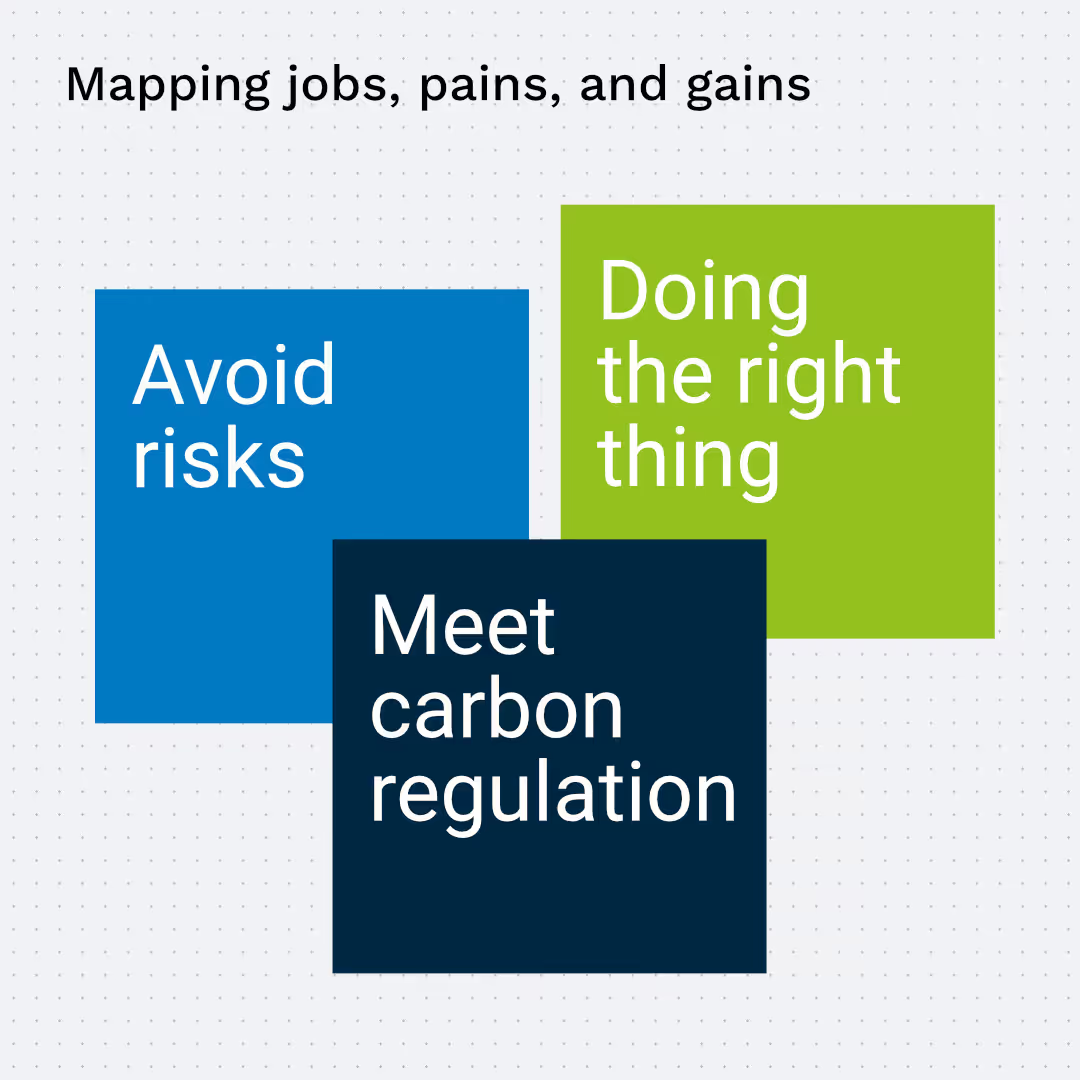
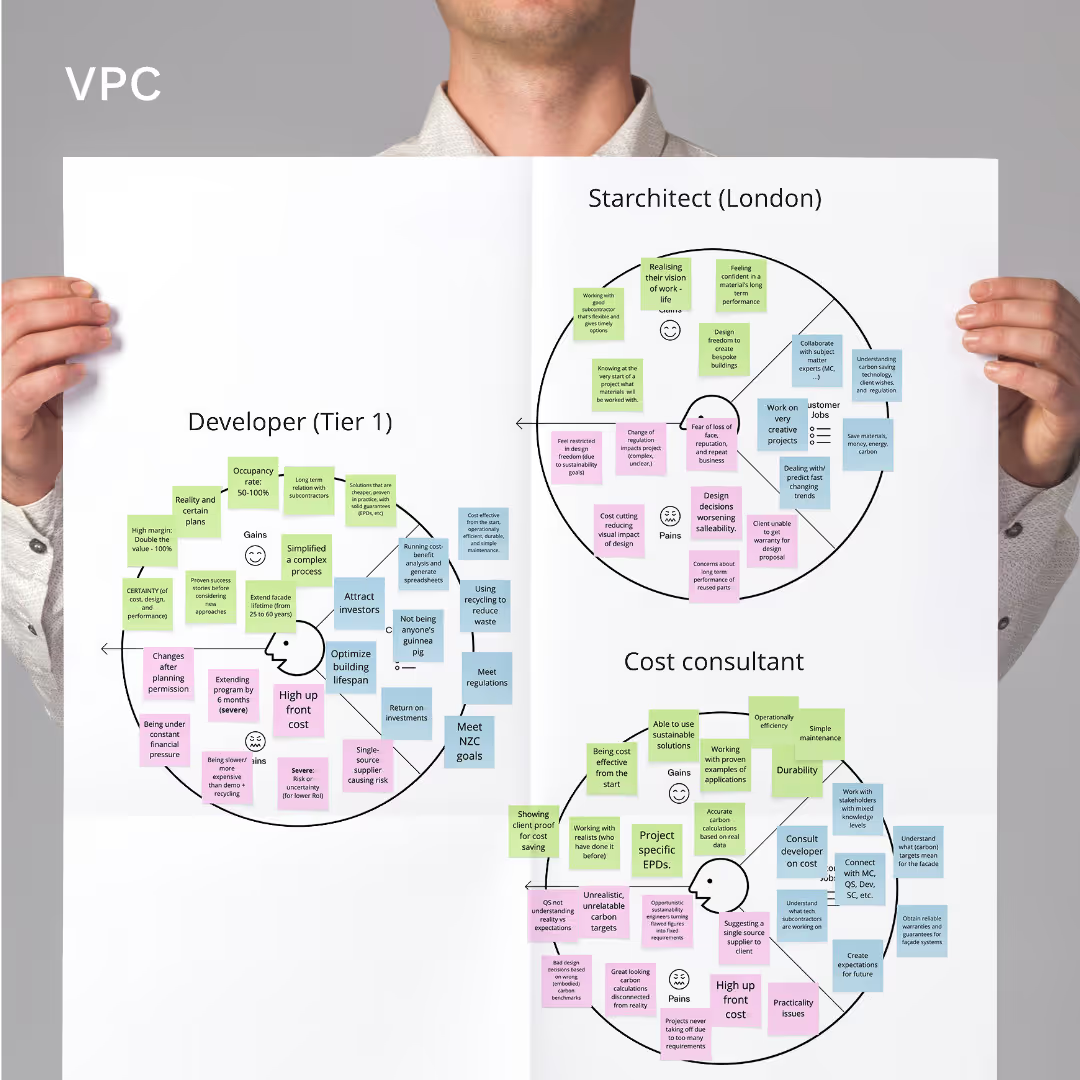
Using Strategyzer’s Value Proposition Canvas, we created a shared understanding of the customer’s jobs, pains, and gains. A simple but powerful framework to make sure the team stays aligned and focused on the customer needs over technical possibilities.
We listed and prioritized the most critical assumptions. Rather than jumping straight into business development, we designed ways to test these assumptions early. Structured, unbiased customer interviews made clear which ideas resonated most. Insights that wouldn’t have come up through traditional sales conversations.
These first learnings became essential input for the next phase: shaping value propositions that address real customer problems and select features for upcoming pilots.
Mapping customer challenges and spotting key assumptions, then designing quick tests using the Value Proposition Design process.
.avif)
In the 2nd phase of the project, we iteratively improved our ‘Circular Facades’ value proposition. A ‘build–measure–learn’ rhythm became the new way of working for the team. Faster, more collaborative, and deeply customer-driven.
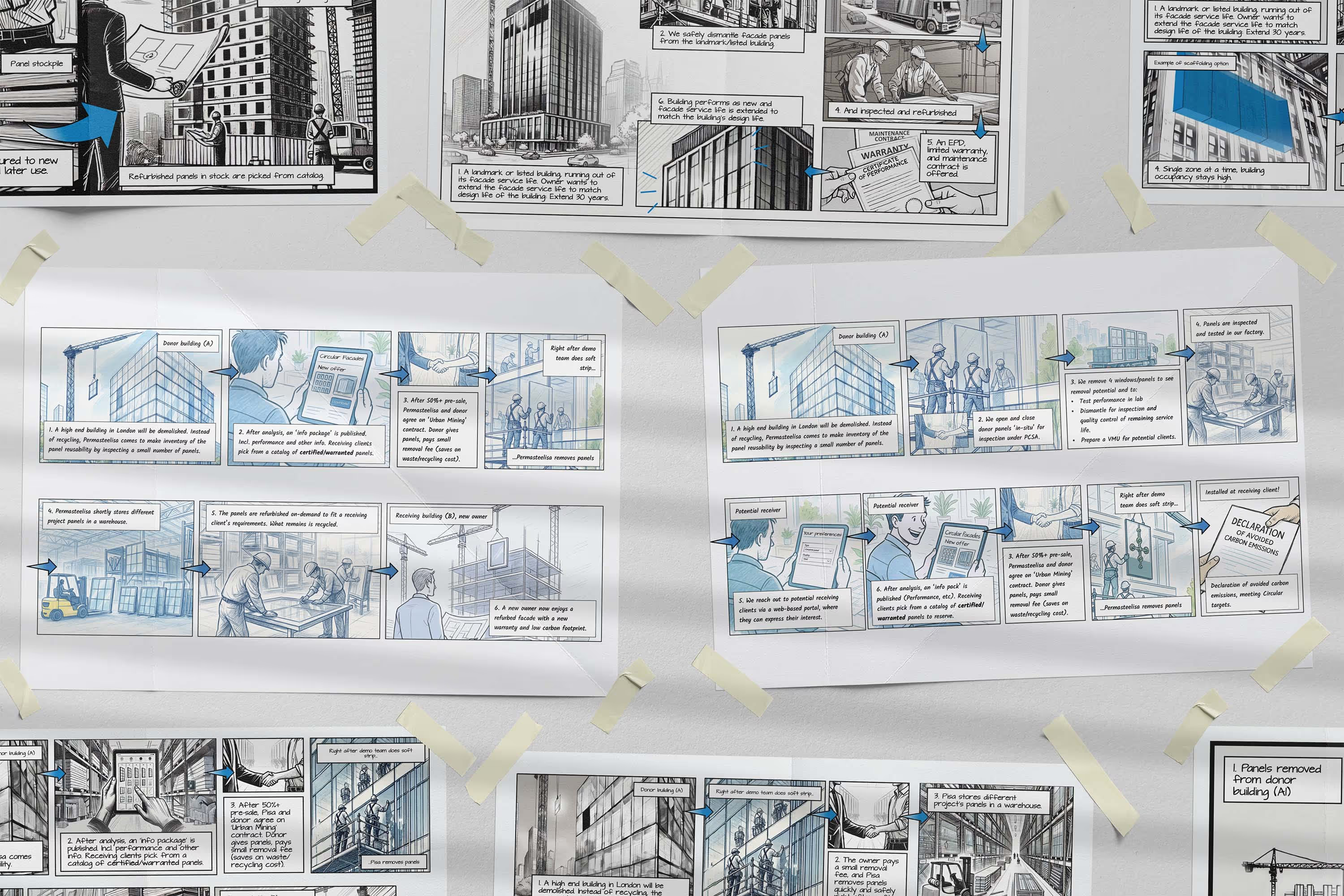
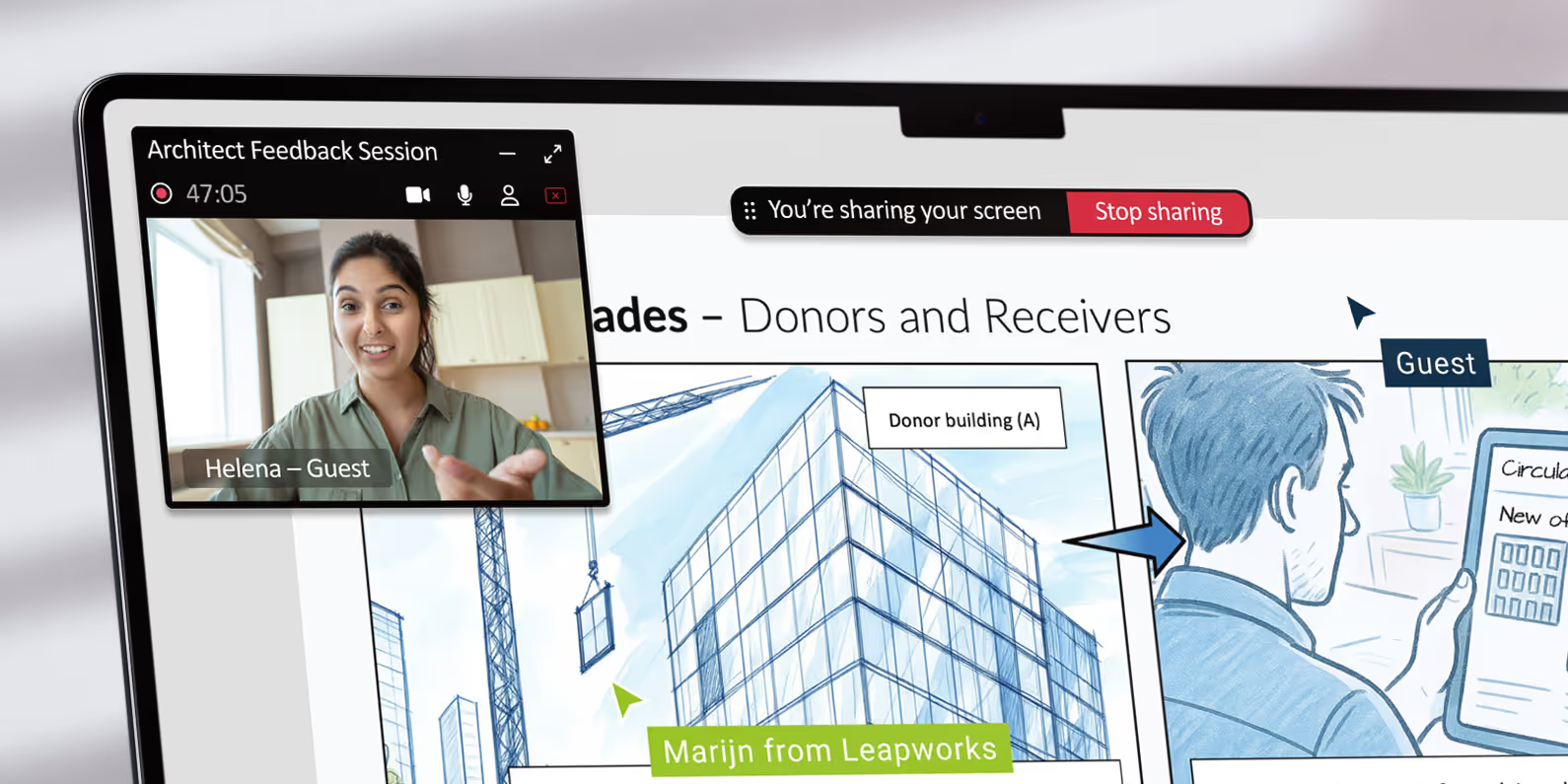
We spoke with leading architects, developers, contractors, and façade consultants in a series of structured interviews. During each talk, we showed visual storyboards so participants could respond to clear scenarios instead of abstract discussions.
After every session we updated the value proposition, sharpening the fit between the problem and the solution.
A crucial part of this process was how we conducted the interviews. Instead of asking for opinions about the future (or worse: asking ‘Would you like this?’) we focused on people’s actual experiences and past behavior. This revealed what customers really valued.
From warranties and performance expectations to perceived risks, we learned how our initial ideas differed from the customer’s reality.
These conversations went far beyond what a traditional sales meeting would uncover. They brought rich insights that now guide the team’s feature selection and pilot setup. It proved the value of going “out of the building” early to find real proof.
Internal departments (legal, finance, operations) were involved along the way to make sure the business could deliver what the market confirmed.
Again, what we learned here became the springboard for testing the best idea in a broader market place during the next phase.
Using visual storyboards in expert interviews to make ideas concrete, reveal gaps, and iterate our value proposition.
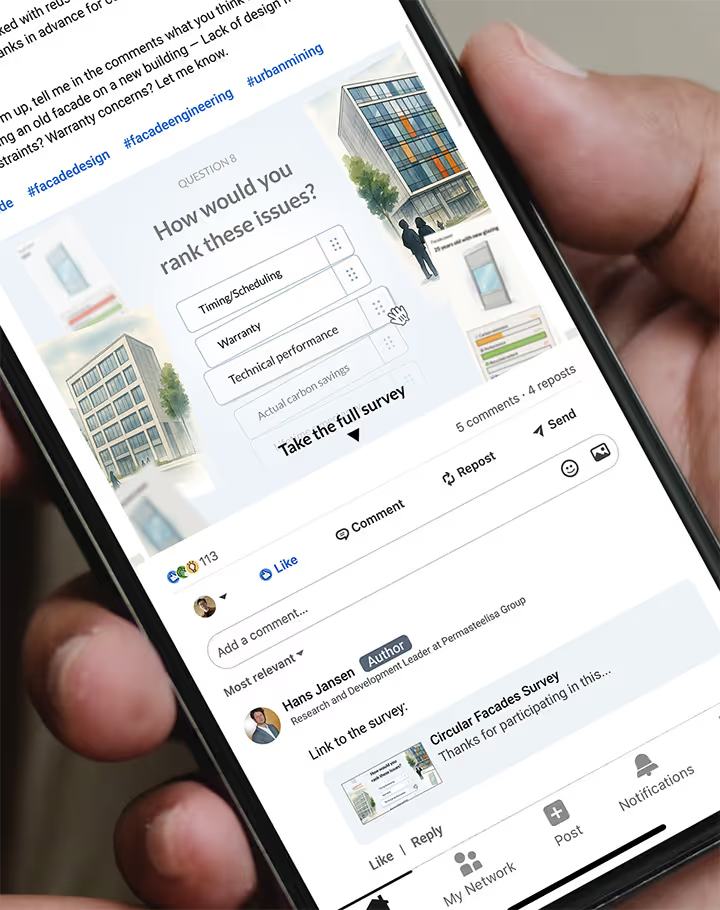
With a clear proposition, we started testing on a much wider scale. In addition to relying on the team’s professional network of industry experts, we added more outreach through LinkedIn Sponsored Ads. An innovative tactic that brought in perspectives well beyond the usual contacts.
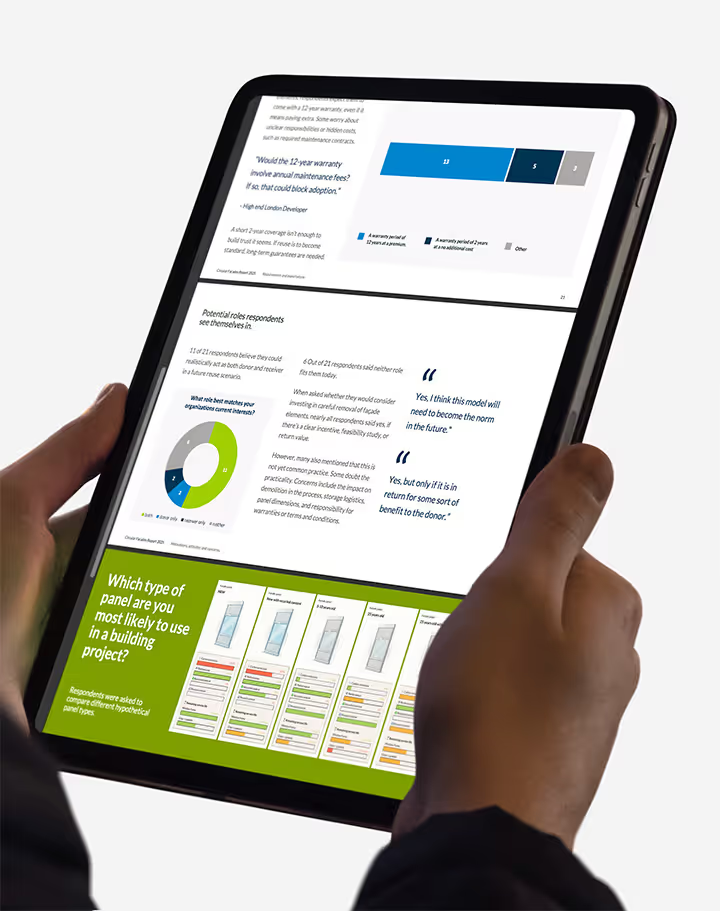
The campaign led to an in-depth survey with key industry players, capturing insights around pricing expectation, potential market, and customer priorities. The results, combined with the earlier interview findings, were compiled into a professional report and are now being used in “lessons-learned” sessions within Permasteelisa to inform upcoming pilots. The tools and frameworks developed during the project — from canvases to surveys — are now part of their internal innovation toolkit.
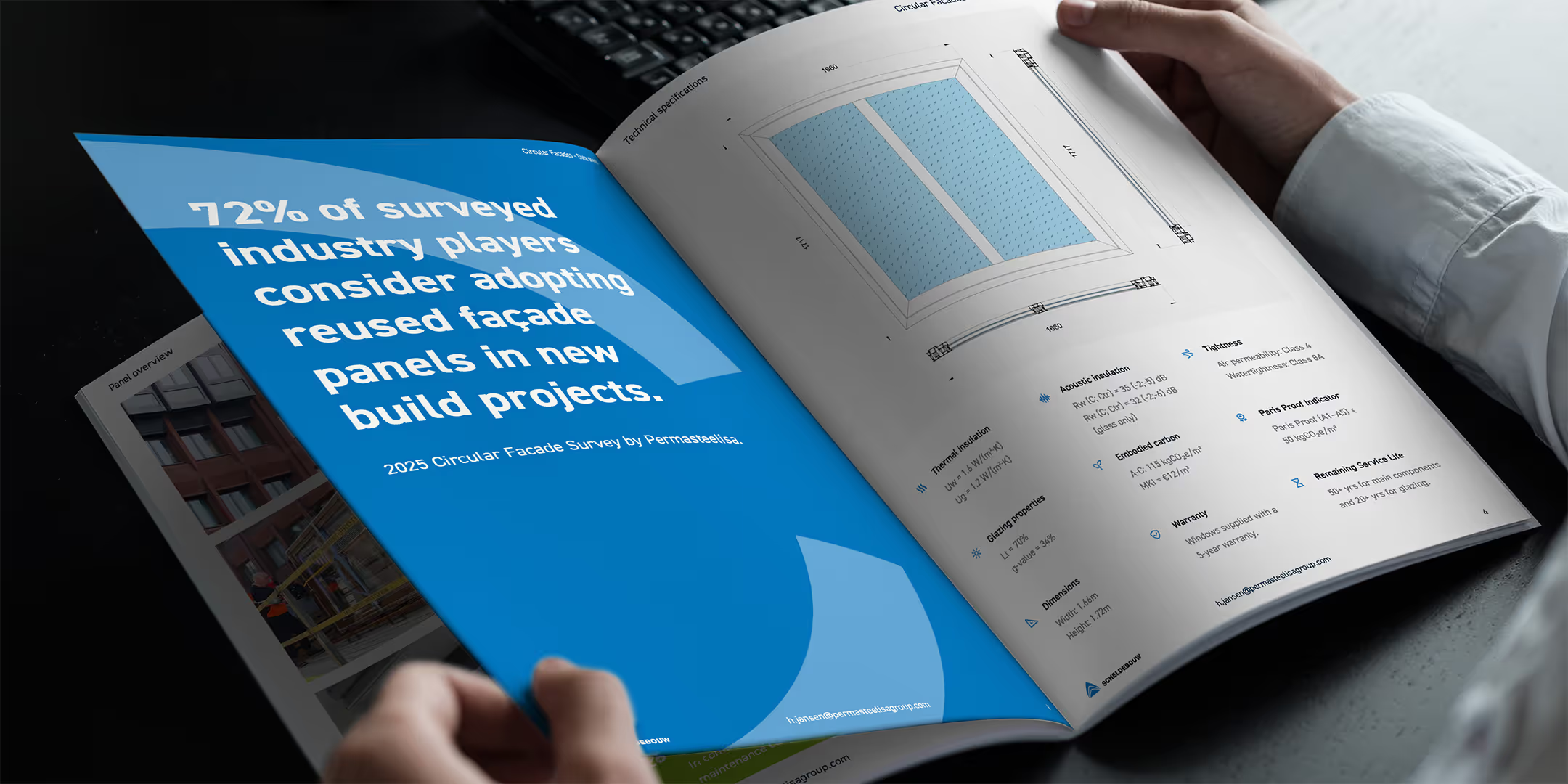
Building on this, we went a step further: creating a real ‘pre-sale offer’. Using facade panels reclaimed from a London project, we prepared a brochure with full specifications, warranty conditions, and performance details based on learnings so far. By putting a tangible offer in front of potential buyers, we were able to measure real interest and even generate promising leads.
The project concluded with a validated value proposition, requests for next steps, and a path towards the first pilot project. Most importantly, the Scheldebouw team now has both a tested proposition and a process for validating future ideas quickly and effectively.
“What really helped us was Leapworks' way of approaching customers and getting real insights out of them. If I had done this with sales, we would not have uncovered all these findings.”
Launching a targeted industry survey to find market insights, resulting in a comprehensive report and used as input for a mock-sale, driving the pilot project now underway.
How many customer interviews does your company do in any given year? Even a handful will give you the insights and confidence pivot new business ideas in the right direction.
Interviews with developers, architects, façade consultants, cost consultants, contractors, and sustainability specialists to uncover their real needs.
We went through workshops, multiple interview rounds, in-depth surveys, and a 'mock-sale' to find evidence of a 'problem-solution' fit.
Our evidence-backed value proposition was used to define and initiate a pilot project with a real customer.

For Permasteelisa the question was never can we build it, but should we. By working side-by-side with their team we turned a promising idea—reusing façades to meet net-zero goals—into a proposition backed by market evidence. What began as a gut feeling is now a validated proposition with features customers value. Shaped by real customer behaviour instead of gut-feeling.
Through months of structured discovery and smart testing, the team gained a clear view of which features and services truly matter, what customers are willing to pay most for, and which projects to target first. These insights now guide Permasteelisa’s ongoing pilot projects, the next step towards a cicular, scalable business model.
On top of all that, they now have a repeatable way to test future ideas with the same confidence and speed.

From assumptions to proof: a proposition built on validated customer needs.
Features customers want and are willing to pay for, now the basis of a pilot project.
A repeatable innovation process the R&D team can apply to future new business ideas.
Ready to move from gut feeling to validated product-market fit? Let’s talk and design your next value proposition.
To learn more about the process, time, and cost estimations of a project like this, or other questions about working with us, feel free to contact us, or check the FAQs on our homepage.
Click 'Request a Meeting' to fill out a short form and connect. OR feel free to text or call today for a quick chat.


